
Department of Dravyaguna
Asthishrinkhala
Common Names
Asthishrinkhala
(Veldt Grape)
Department of Dravyaguna
Uttaranchal Medical College of Ayurveda & Research
Basic Details
-
Botanical Name: Cissus quadrangularis Linn.
-
Family: Vitaceae
-
Synonyms: Asthisamhaara, Asthisamhrita, Asthisamyojaka, Vajravalli, Chaturdhaaraa, Vitis quadrangularis
Introduction
The name quadrangularis refers to the four-angled stem.
This plant is widely used for healing bone fractures, which is reflected in its Sanskrit name Asthi-shrinkhala (that which joins bones).
Morphological Description
Habit:
A creeper with a green, quadrangular, jointed stem, giving a chain-like appearance.
Stem
-
Fleshy
-
Four-angled
-
Nodes and internodes are clearly visible
Leaves
-
Small
-
Divided into 3–5 parts
-
Serrated margins
Flowers
-
White
-
Hairy in appearance
Fruits
-
Round
-
Red in colour
-
Capable of vegetative propagation when bent to the ground
Distribution & Habitat
-
Found throughout India
Chemical Constituents
-
Phytogenic steroids
-
Ketosteroids
-
Sitosterol
-
Alpha-amyrin
-
Alpha-amyrone
-
Tetracyclic triterpenoids
-
Vitamin C
Rasa Panchaka
-
Rasa: Madhura
-
Guna: Laghu, Ruksha
-
Virya: Ushna
-
Vipaka: Amla
Pharmacological Properties (Karma)
-
Deepana
-
Pachana
-
Shoolaghna
-
Kandu hara
-
Fracture healing (Asthi-sandhana)
-
Carminative
-
Digestive
-
Astringent
Therapeutic Uses
-
Pliha roga
-
Agnimandya
-
Shoola
-
Gudakeelaka
-
Apasmara
-
Vata roga
-
Dushta vrana
-
Gulma
-
Irregular menstruation
-
Scurvy
-
Bone fractures (major indication)
Useful Part
-
Whole plant
Dose
-
Leaf juice: 10–15 ml
-
Powder: 2–4 g
-
Decoction: 50–100 ml
Important Formulations
-
Asthisamharaka juice
-
Asthisamharaka powder
-
Decoction of dried stalks
-
Lakshadi Guggulu
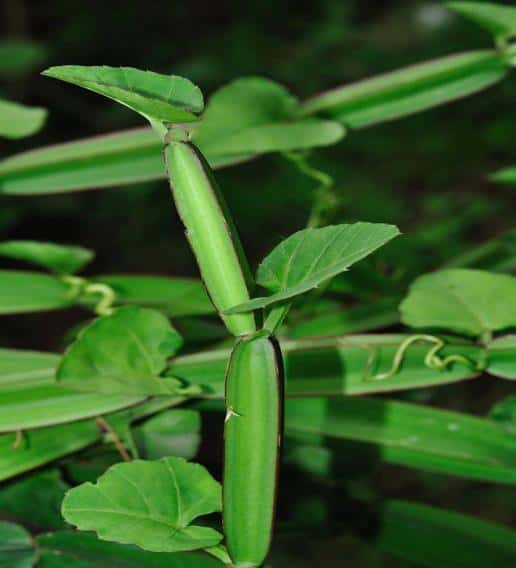
Cissus quadrangularis Linn. — Asthishrinkhala
Scan to view Asthishrinkhala