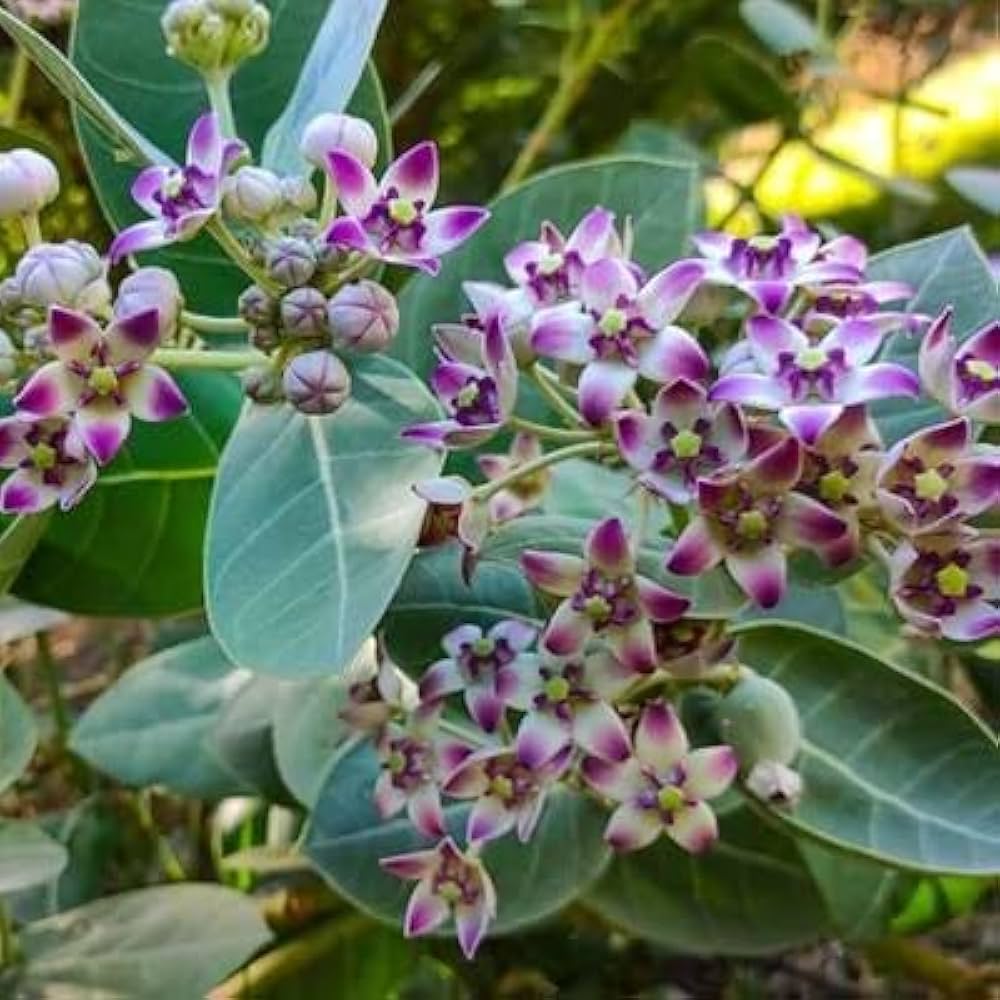
Ark
(Crown Flower)
Department of Dravyaguna
Uttaranchal Medical College of Ayurveda & Research
Botanical Details
-
Botanical Name: Calotropis procera
-
Family: Asclepiadaceae
- Synonyms: Ark, Madar, Toolphal, Ksheerparna, Vikirna, Aasphots
Morphological Description
Habit:
A perennial shrub growing up to 2.5 meters in height with many branches and sub-branches.
Bark
-
Furrowed
-
Yellowish-white
Leaves
-
Simple
-
Opposite
-
Ovate
-
Cordate at base
-
Size: 4–6 inches long, 2–3 inches wide
Flowers
-
Fragrant
-
Arranged in clusters
-
White to lavender in colour
-
Five-pointed petals with a small crown
Fruit
-
Follicle
-
Thick, fleshy, green
Seeds
-
Numerous
-
Broadly ovate
-
Brown
Rasa Panchaka
-
Rasa: Katu, Tikta
-
Guna: Laghu, Ruksha, Tikshna
-
Virya: Ushna
-
Vipaka: Katu
Pharmacological Properties (Karma)
-
Kapha-Vatashamaka
-
Vedanasthapana
-
Shothahara
-
Vranashodhana
-
Vamaka
-
Gulmahara
-
Deepana
-
Swedajanana
-
Kushtaghna
Therapeutic Uses
-
Kapha-Pitta disorders – flowers
-
Karnashoola & deafness – Ark oil
-
Shodhana & Ropana – leaf powder
-
Ajeerna, constipation, Gulma – root bark powder
-
Kapha-Vata diseases – root bark with ksheera
-
Jeerna & Vishama Jwara – root bark
-
Kasa & Shwasa – root and flowers
-
Visha (poisoning) – root juice with black pepper
-
Mentioned in cancer management (traditional reference)
Useful Parts
-
Root bark
-
Flowers
-
Leaves
-
Latex (Ksheera)
Dose
-
Root bark powder: 0.5 – 1 g
-
Flower powder: 1 – 2 g
-
Ark ksheera: 0.25 – 0.75 g
Important Formulations
-
Ark Lavan
-
Ark Oil
-
Arkeshwar