
Department of Dravyaguna
Aparajita
Common Names
Aparajita
Department of Dravyaguna
Uttaranchal Medical College of Ayurveda & Research
Basic Details
-
Botanical Name: Clitoria ternatea
-
Family: Fabaceae
- Synonyms: Girikarnika, Aasphota, Vishnukranta, Supushpi, Dadhipushpika
Morphological Description
-
A herbaceous perennial plant belonging to the Fabaceae family.
-
Leaves:
-
Pinnate, with 5–7 leaflets
-
Leaflets ovate to elliptic
-
Smooth margins
-
Size: 3–5 cm long
-
Bright green and arranged alternately along the rachis
-
-
Flowers:
-
Solitary or in pairs
-
Large (4–5 cm in diameter)
-
Pea-shaped (typical papilionaceous flower)
-
Structure includes standard (banner), wings, and keel
-
Commonly, vivid blue, white, and purple varieties also occur
-
-
Fruit:
-
Flat, linear, dehiscent pod
-
Size: 5–12 cm long × 1–2 cm wide
-
-
Seeds:
-
Small, smooth
-
Dark brown to black
-
Oval to cylindrical
-
-
Distribution:
-
Native to tropical equatorial Asia (India, Indonesia, Malaysia, Philippines)
-
Widely cultivated in tropical and subtropical regions for ornamental and medicinal uses
-
Panchaka
-
Rasa: Katu, Tikta, Kashaya
-
Guna: Laghu, Ruksha
-
Virya: Sheeta
-
Vipaka: Katu
Pharmacological Properties
-
Medhya (brain tonic)
-
Vishaghna (anti-toxic)
-
Deepana (enhances digestive fire)
-
Pachana (digestive)
-
Balya (strength promoting)
-
Rasayana (rejuvenative)
-
Shothahara (anti-inflammatory)
-
Shukrala (improves reproductive tissue)
-
Krimighna (anti-helminthic)
Therapeutic Uses
-
Smriti daurbalya (memory weakness)
-
Buddhi mandya (low intellect)
-
Karshya (emaciation)
-
Jara (aging)
-
Ojakshaya (loss of vitality)
-
Shotha (inflammation)
-
Vatarakta
-
Agnimandya (low digestive power)
-
Aruchi (loss of appetite)
-
Ajeerna (indigestion)
-
Shukra kshaya
-
Krimi roga (worm infestation)
-
Vishavikara & Garavisha (toxicity conditions)
-
Kushta & Vicharchika (skin disorders)
Useful Parts
Roots, Leaves, Flowers, Seeds, Pods
Dosage & Preparations
-
Phanta: 1–2 cups (240–480 ml/day)
-
Churna: 1–3 g twice daily
-
Kwatha: 30–50 ml twice daily
-
Arka: 10–20 drops twice daily
-
Lepa: For external application as required
-
Beeja Churna: 1–2 g twice daily
Important Formulations
-
Brahmi Ghrita
-
Medhya Rasayana
-
Aparajita Churna
-
Aparajita Kwatha
-
Aparajita Arka
-
Mahakalyanaka Ghrita
-
Aparajita Taila
-
Aparajita Vati
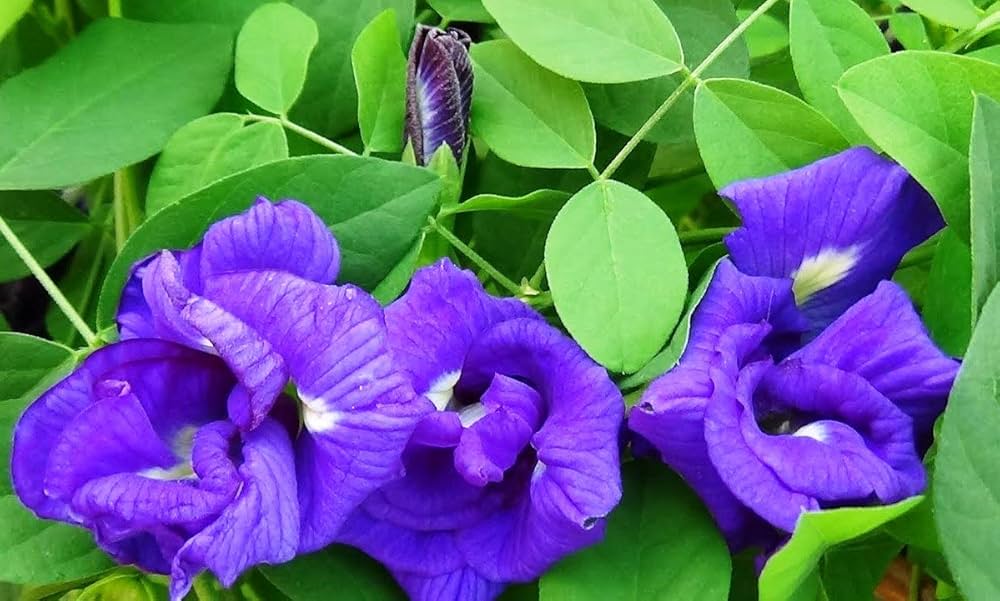
Clitoria ternatea — Aparajita
Scan to view Aparajita